12 March 2012

Spring Rain, Flowering Life

A light rain settled over the Mountain Campus for the past week, though finally today it was dry. No complaints, really, since the precipitation clears the smoggy air a bit and makes for spring flowers aplenty:


Walking past the lower corner from my building, a sweet familiar scent caught my nose and sure enough a cherry tree (or some close relative) had burst into bloom:

Now THIS was interesting: on my way home from the supermarket, I passed a lady with swords slung over her back. Then another. I paused, and two more joined them. Veering from my usual shortcut, I followed discretely. Ten or so middle-aged women gathered in vacant out-of-the way spot and began warming up with a little taichi, plus twirling swords and what not. I pantomimed permission to photograph. Poetry in motion. Body and mind. Nanjing 1937? Never again!:


A group of the minority pre-graduate students stopped by my office and took me out to supper (they paid!). This was "dry hotpot" (i.e. no oil floating on top)--very good as is most everything I've eaten in China. And with such good company and a few glasses of beer, you can't go wrong:

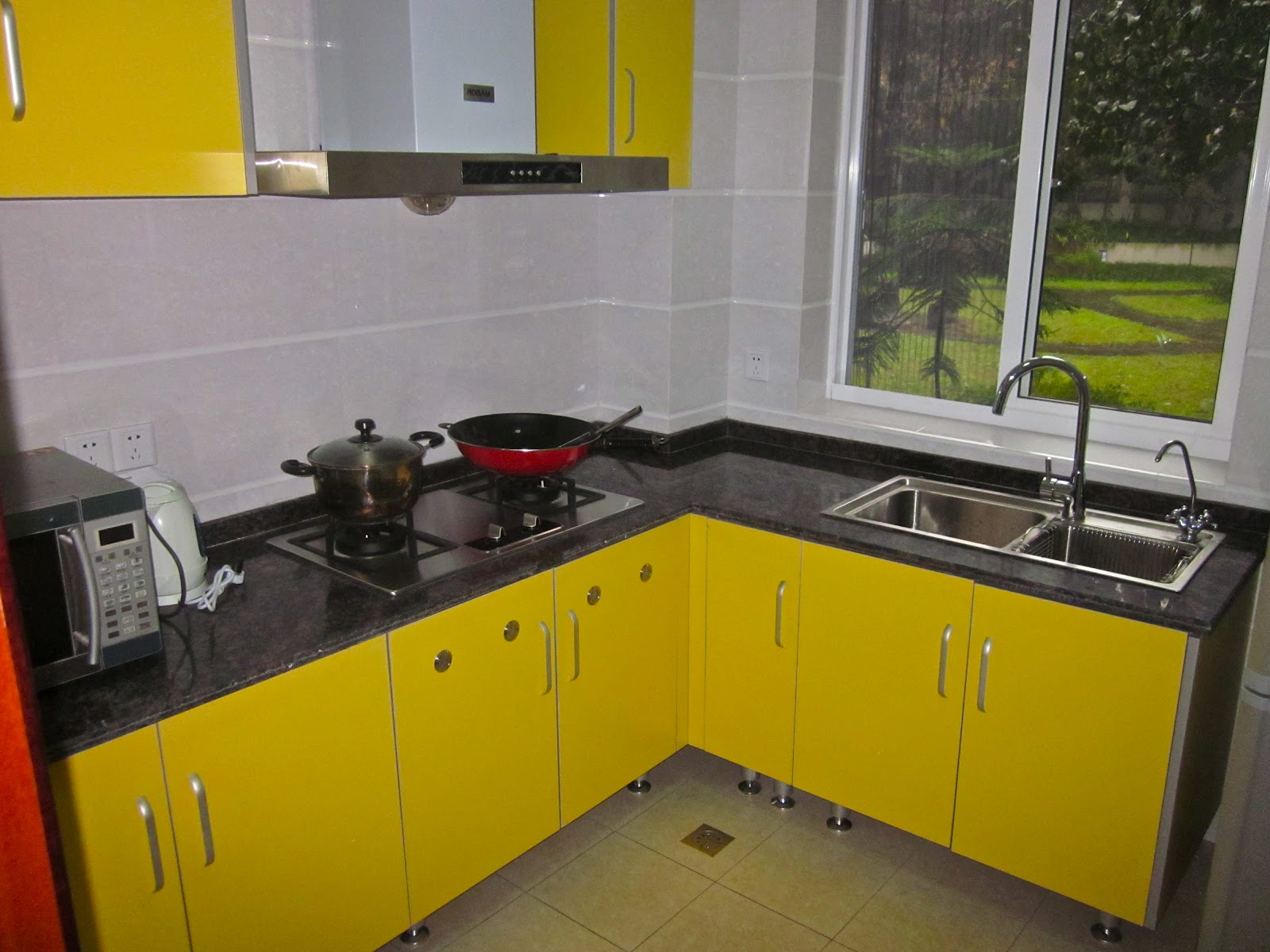
Moved into my luxurious new apartment (with it's VERY OWN hot water heater) last week. I have to say, Southwest University (and my students and colleagues) are really pampering me. I would ask my Dean back in the U.S. for better terms, but he's probably pay SWU to take me. Two features of the new place are especially appreciated: a (whoo-hooh!) washing machine on the balcony; and an efficient little kitchen:

The living room is nice too--well lit by the large sliding glass doors to the balcony and also with a big chandelier. A good place to crash after a long day at the office or exploring local byways:

No week is going to be complete, it seems, without noticing the work of the building & grounds crew in working so artfully with nature (I need to find out if I can meet one of the gardeners):


Finally, the highlight of my week. It was my great honor to meet Chen Baoqiang, Professor of Wushu (= Martial Chen, Professor of Martial Arts). He is a Kung Fu master and part of a small but growing revival of traditional Chinese martial arts (swords, boxing, fighting poles, etc), including archery:


He has a number of students learning the traditional Manchu bow, and some show very good form:


I also shot a few arrows. The bow, though very short especially for my 6-foot frame/29+" draw, is also remarkably smooth. I regularly hit within 8 inches or so of the target center at 20 meters, and with a little work on my grip and arrow nock placement should do better.  There is no "shelf" for the arrow--you shoot it off our index finger. Likewise, no nocking point on the string--you just eyeball what seems right. Looks like a new Friday routine!

05 March 2012

Coming Home to China

I have spent a good part of my life reading and thinking about Zen philosophy through the work of Gary Snyder, Thomas Merton, and other American authors. The traditional built landscape around Southwest University in Beibei resonates with that sense of harmony in the human/natural world (singular: one world). But there is more! Growing up in the Alleghenies, I learned to find ginseng, appreciate the virtues of maples, enjoy the beauty of blooming tulip trees--and I heard wonderful stories about that grand tree of the Appalachian forest, the American chestnut. Yes, the forest here feels very familiar and no wonder: south China and the Appalachians were a contiguous environment a mere 10 million or so years ago--an eye blink in evolutionary and geological time. Chinese chestnut tree, photo from BanLi.net:

Consider the built landscape. Man built a set of stone steps to reach one of the many little gazebos (tiào wànɡ tái  眺望台 ) that dot the campus: 


A nearby tree sent out a root and the root wanted to cross the steps. And so, with a little help from some caretaker, it did:

Sometimes you can see bits of twine used to train the growth:

There are also small pools or "pond sculptures" here and there on the campus.  This one has a tiny island with small trees and brush creating a root mass:

The gold fish seem to like it:

I found one larger pond on the university grounds, with several anglers (I think access is restricted, although the gate was open and no one seemed to mind me hanging out). A little girl of eight or ten was "Johnnie-on-the-spot" running back and forth along the narrow ledge like a crouching dragon, leaping tiger to net each fish:


The university landscapers seem to have eschewed flowers per se for flowering shrubs and trees, some of which are striking:

And some of which, like this species of magnolia, will look familiar to folks in the southeastern U.S. (view from my apartment window): 


 The common geographical/evolutionary history of south China and the Appalachians has led to an additional project spurred on by my childhood friend Gary Robertson and his friend, Sara Fitzsimmons--a scientist with the American Chestnut Foundation. American Chestnut (Castanea  dentata) trees largely succumbed to a European blight in the early 1900s. Closely related Chinese species are resistant to blight, and the foundation (among many other things) is working on ways to genetically modify the American species to be resistant without changing other aspects of the tree. A cool, postmodern project where genetic engineering (for a change) is seeking harmony with nature. 


I hope to visit a world heritage forest site near here, Wudang Mountains/Shennongjia region. Another park in the area, Zhangjiajie, inspired some of the scenery for the film Avatar, and from the movie one pillared peak in the park was even renamed "Avatar Hallelujah Mountain." Local folks collect wild chestnuts from Shennongjia and other forests, and these wild chestnuts are renowned in the region as the tastiest to be found (photos from ShopCSTong):


Walking around this sprawling campus with no straight roads yesterday, looking for the archery field, I became lost. A graduate candidate from my class spotted me, directed me to the place, and we spent the rest of the day together walking, talking, sharing a beer, and having supper together. Lo and behold, Chao Wang ("Leo") comes from the Wudang Shan region and his uncle gathers wild chestnuts. I am hoping that this provides a fertile foundation for future collaboration between Sara Fitzsimmons (who has done some field work in China) and knowledgeable locals.

In America, we think of homeless people living under bridges. Here, in a remarkably efficient use of space, I found a small home built under a bridge:

Given urban growth and modernization, and the tendency to sweep away the old, I wonder if the new China will preserve the cultural value of seeking harmony with nature:

This man on the demolition site, kind enough to allow a photograph, strikes a pensive pose:  

Though I try to emulate nature and flow like a water, I am occasionally stymied by my encounter with China, as when this interesting morsel turned up in my supper last week:

For the most part, I like what I experience. An hour+ bus trip to the big city (Chongqing) provided some sightseeing along the way, and once there I took in a musical performance by the American opera star Carla Dirlikov (photo by professional photographer Tim Hill) at the city's library: 

Two graduate students were kind enough to guide me through the intricacies of the bus system and along the streets of Chongqing. That's Tang Shuqi ("Kristy") on the left and my teaching assistant Lao Xi ("Jackie") on the right:

Strange that I've been here just a few weeks, yet the people and the environment (perhaps they are one word: the Place?) is hauntingly familiar in a way that suggests I already miss being here though there are four months left to go.  There should be a word for missing a place you haven't even left yet and will not leave for some time. Let's model it on German word amalgamation, something like, Placelongingwhileinplacebeing.

29 February 2012

Southwest University: Classes Begin!

My classes began this week--Tuesday's graduate class in U.S. Environmental History and Friday I'll meet the "pre-graduate students" in History of American Technology & Society. Of the 30 graduate candidates, five or so engaged in some class period Q&A, more talked with me following class, and several responded to a subsequent email I sent to all candidates yesterday (it is now Thursday morning in China).

Following class on Tuesday, a colleague and I went out for my first hotpot dining experience. You sit down, order, and drink beer. In the center of the table is inset a boiling pot of water with magical spices, chili peppers, and mouth-numbing Szechuan peppers--all with a thick layer of oil atop. A gas burner controls the boiling cauldron, and we ordered numerous little plates of food -- yummy long thin mushrooms of a variety I've never seen, meatball-like delicacies, thin strips of pork, pads of rice cake, etc. You carefully slide the contents into the hotpot (DO NOT splash), drink more beer, and wait for the contents to cook. You then fish the goodies out with chopsticks, cool them in a little dish of oil and garlic, and enjoy (and drink more beer! photo is from ChinaTravelDepot blog):

My life here is settling into a comfortable rhythm, beginning with morning coffee to the happy sound and sight of children at the neighboring Montessori Kindergarten. One day, it's martial art practiced to a nationalistic anthem:

Today, it's sports activities. And each morning they march off the playground to the tune of "Jingle Bells." It is hard to describe how happy this makes me as a I start my day, smiling for the next hour or so as the jaunty tunes echo in my ears:

Every other day I think of an excuse to visit the supermarket for beer, bread rolls, yogurt, and sundry other necessities. Each visit is a field trip to Chinese culture. The supermarket -- just a run of the mill, chain outlet -- has very fresh and sometimes live food. This woman decided to go fishing for her supper, and after several unsuccessful efforts with the net she was exuberant when when she finally caught one of the elusive denizens of the tank:

Chicken feet are a standard snack, nibbled on at bars or in other social gatherings:

Growing up in the Allegheny headwaters, we sometimes went to swampy areas along the river at night with a flashlight, gigging for frogs. Here, it is a little easier (much like the ever popular lobster tanks in American restaurants). I think here, though, the entire frog is cooked up and not just the legs:

I was surprised to find a flock of free range chickens roaming the hillside behind the canteen where I eat. Some students were watching them also, and when I pulled out my camera for a photo these two ran across the street to get into the picture:

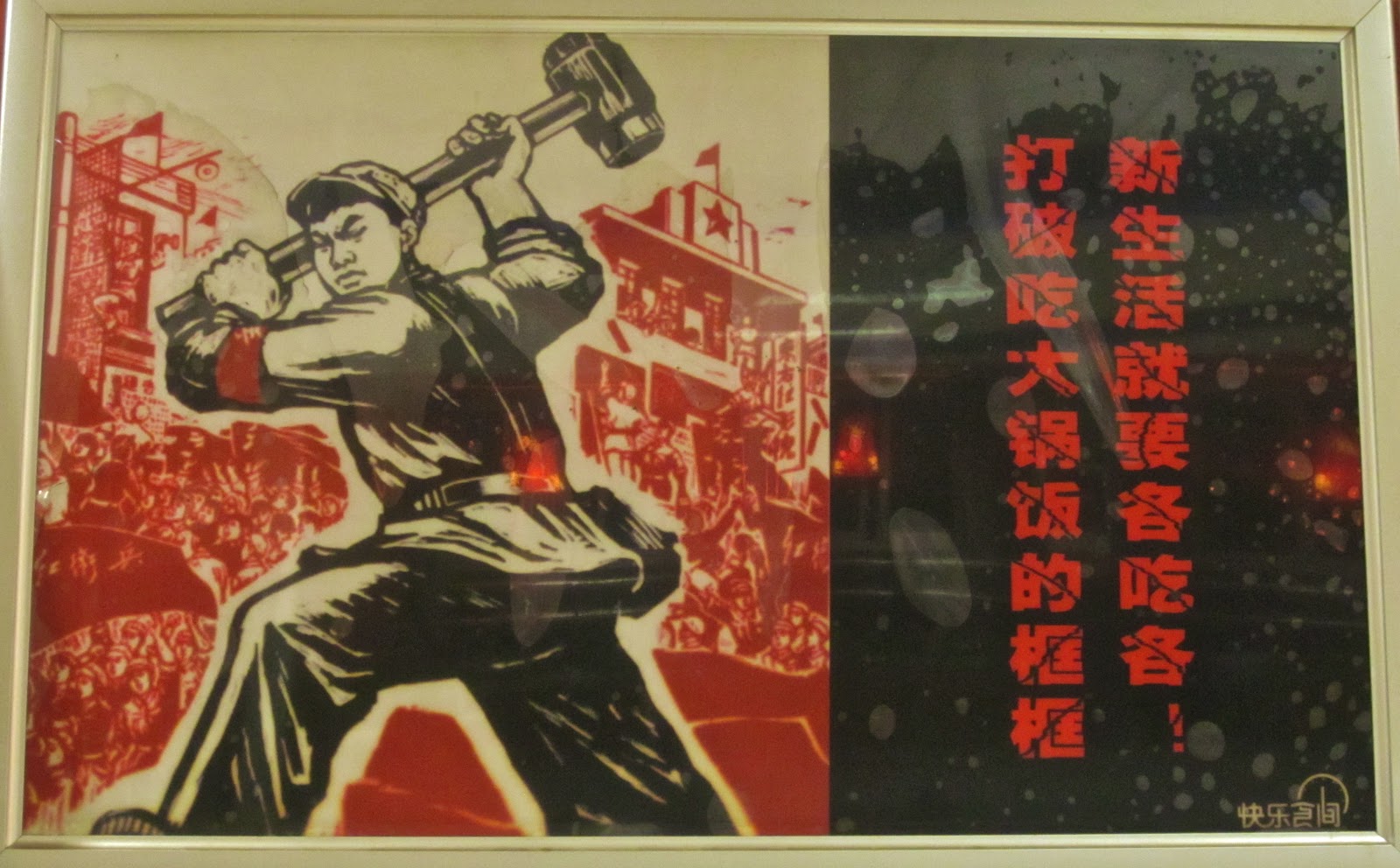
The canteen still displays many posters from the Maoist/Cultural Revolution period. They date from 1958 onward. I suspect some of the more radical anti-Western ones have been taken down over the years. Lest anyone get the wrong idea, these are historical artifacts: students expressed laughs and some groans of embarrassment as I wandered about photographing the posters in the harsh fluorescent lighting:


The beauty and geography of Southwest University in the "Mountain City" of Beibei continues to amaze and delight me. The well crafted stone steep stone steps that go here and there are an adventure and welcome physical workout:

I also deeply appreciate the Zen aspect of harmony with nature that, at least in some ways, structures the landscape. At my home college in Montana, the director of building and grounds decided to cut down a row of big old cottonwood trees because the roots were damaging the sidewalk and a retaining wall, and because the shedding limbs might pose a threat to students. This, despite the fact that the trees provided welcome shade and were home to nesting red-shafted flickers each spring:


By contrast, whomever maintains the grounds here clearly allows and encourages nature and culture to intertwine in interesting and sometimes (for physical human structures) "damaging" ways. Consider this little tree growing in the rock garden next to my apartment:

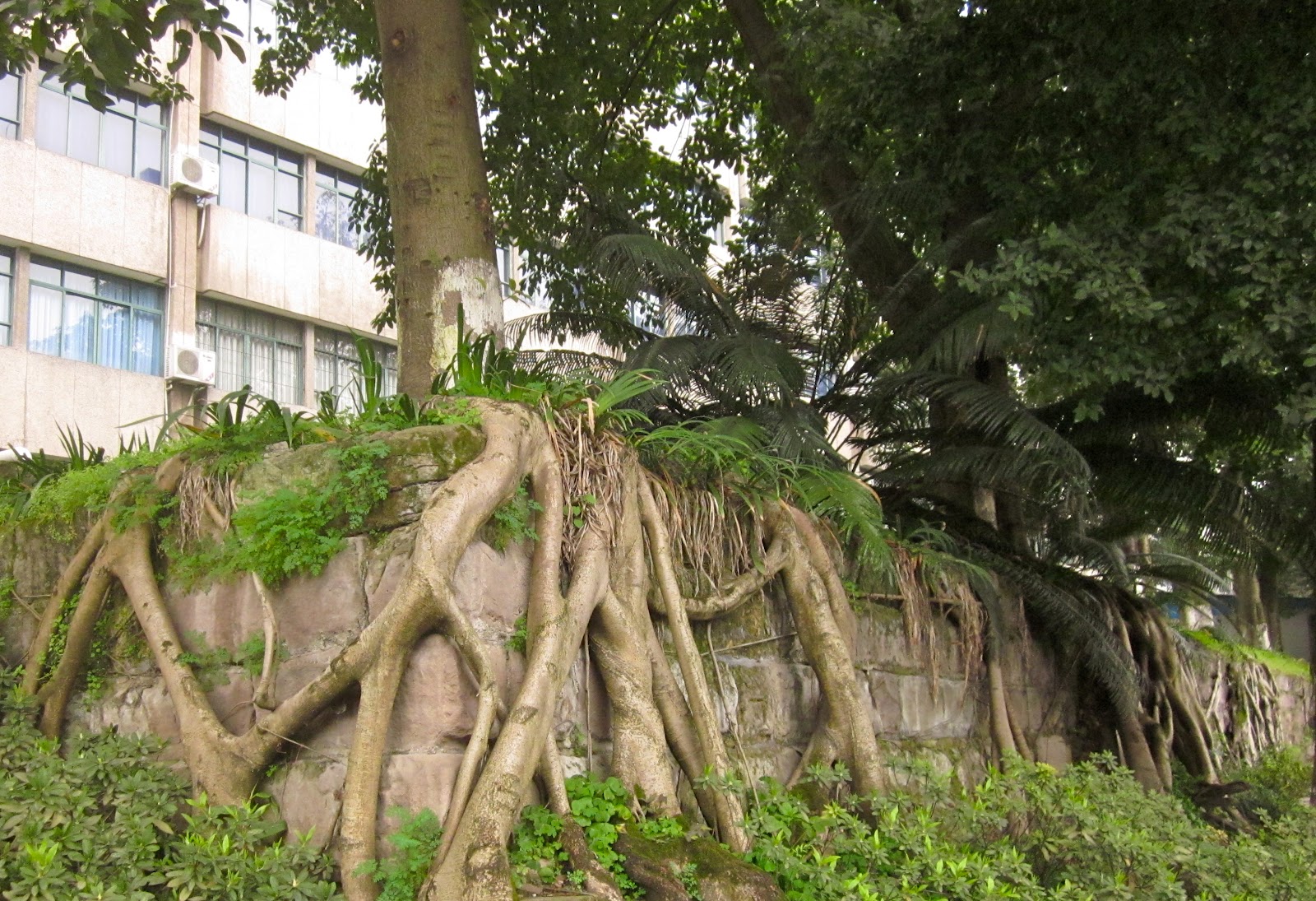
Or, better yet, this large tree whose roots have become one with the retaining wall:

This tree, in a parking lot, was clearly planted on a well-crafted pile of stones to achieve an interesting effect (as well as, I'm sure, provide shade in the summer heat):

As I explore the byways of this huge sprawling campus on my long daily walks, I continue to find pleasant sights that hold me captive for a few minutes as I appreciate their grace and beauty, and contemplate what they say about this culture I find myself in:

Well, back to work--I am still revising my introductory lecture for tomorrow's class. The graduate candidates Tuesday were amazed to see photos of hunting and everyday life in Montana, so I'll include a few more of those. 再见了! (Goodbye for now!) 

24 February 2012

Everyday Life in China: Making the Strange Familiar and the Familiar Strange

One of the great pleasures of living in a foreign place is in figuring out how to do the simple, everyday tasks we take for granted at home. For me, this challenge is ramped up an order of magnitude by my total ignorance of spoken and written Mandarin. The painter Paul Klee was fond of saying that art's purpose is, "To make the strange familiar and the familiar strange." I like that as one of the things that makes life worth living. In locating the toilets nearest my classrooms, I found posted these signs that help make my point (I will spare the Germanic Sauberkeitsfanatiker among you a photo of the squat toilets!):


My office, except for the strange multiple deadbolt lock on the door, was immediately familiar. I spent a few hours moving in yesterday, setting up class files on my computer, and enjoying this comfortable and "clean, well-lighted space" (as Hemingway said):


I took a break to walk outside, find a place to sit with good feng shui, enjoy an orange, listen to the strumming guitar and folk singing of an aspiring student-artist, and watch these handsome birds (species, anyone?):

Later, I decided I needed some file folders, notecards, and a pair of scissors. The student books & dry goods store we take for granted on American universities do not exist here. A quick Google search for nearby office supplies/stationary stores proved fruitless. Time to walk!

I journeyed over to the commercial area near campus, remembered a side street where a colleague helped me buy a Chinese phone (turns out my iPhone is the only model every made without a sim card: thank you very much, Verizon), and -- after less than an hour of searching -- found the perfect little shop crowded with an impossible, jumbled, totally delightful array of office supplies. The proprietors, whom I took to be a married couple, waived away my awkward sign language with a friendly gesture that I took to mean, "Go find what you want!" After pawing around through stacks and bins, I found the requisite items (no one, it seems, uses hard copy file folders anymore, so these were in an especially obscure and buried place). My one successful effort at sign language, a scissoring action with my index and middle fingers, produced a box of diverse scissors from which I chose a mid-priced, older pair that might date to the Cultural Revolution. Acquisition in hand, I ventured back out to the street and at a busy intersection lingered to take in the scene and record some photographs:


The latter (above) is especially informative about my new home:

  • Bang-bang men and women are common (left in photo), carrying loads for hire using their strong shoulder poles. Some of the poles are simply bamboo stalks, and others are carefully crafted and wide to be as strong, light and comfortable as possible;
  • Older people tend to dress in dark and fairly drab styles;
  • Younger people tend to dress in bright, gay colors;
  • The streets and storefronts are often brightly decorated;
  • I sense that people do not like to have their photo taken (and generally avoid it); and
  • Everyone dresses in warm layers (note the down coats!) despite the low 50s deg F weather.

I had planned to hike on Jinyun Mountain -- a 3,000 foot high ridge that separates Beibei from Chongqing -- with a colleague today, but alas after a dry week a steady rain has settled in.